COVID & remote Aboriginal communities

Writing in the Washington Post on 13th August, Michael E. Miller says there is panic as an outback outbreak rings COVID alarm for Australia’s indigenous people.
Since the day the coronavirus arrived in Australia 18 months ago, the people of Walgett watched and prayed it would never find its way to their tiny Outback town, where many residents are Indigenous and especially vulnerable.
When an outbreak in Sydney 400 miles to the southeast began to seep into the surrounding region last month, some locals feared the worst was finally on its way.
“Everybody said it’s not a case of if we are going to get it, it’s a question of when,” said Michael Urquhart, general manager of Walgett Shire Council. “We just didn’t think it would be this quick.”
Walgett reported its first case Wednesday when a local man tested positive after being released from a state prison. On Friday, the town, which is now under lockdown, reported two more. In a matter of days, Walgett had gone from a remote Outback town known best for its hot spring to a potential covid hot spot that the nation was talking about.
The news raised alarms in the remote town of 2,000, where the hospital has no intensive care unit and seriously ill patients are often flown by helicopter to a city three hours away. There are many people with underlying health issues and there are under resourced health services. Urquhart said, “It feels like we’re holding our breath. Is there going to be another one and then another one, and then it will start like cancer in the community? That’s what we are fearing.”
It has also struck fear in the Indigenous community, which makes up nearly half the town and is more susceptible to an outbreak. According to Walgett Shire Mayor Ian Woodcock, the 27-year-old who first tested positive is an Aboriginal person.
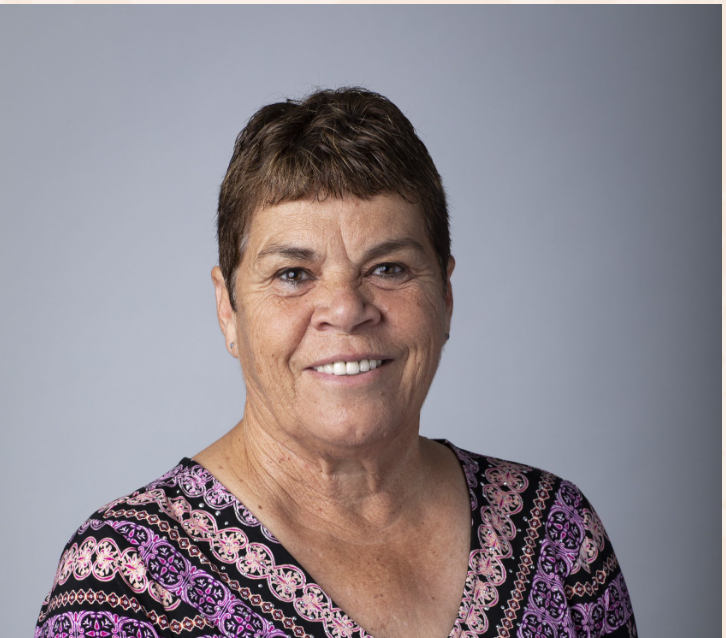
“There is panic,” said Anne Dennis, a Gamilaraay woman who lives in Walgett and leads the New South Wales Aboriginal Land Council. “I really am apprehensive. We’ve got elders in the community that we really want to keep safe. They are really scared, really frightened, and getting tested.”
Experts have warned since the early days of the pandemic that the coronavirus could overrun Australia’s Indigenous communities, which suffer from higher rates of chronic health issues and a lower life expectancy than non-Indigenous Australians, particularly in remote areas.
But the country’s “zero covid” approach, combined with Indigenous community health efforts, kept the virus at bay. Indigenous Australians have been six times less likely than the wider Australian population to contract the virus, government data showed earlier this year. Of the 149 cases involving Indigenous people as of April, few were serious enough to require hospitalization. Not a single Aboriginal elder died. There were no cases in remote communities.
Until now.
Cases have also mushroomed in Dubbo where the Walgett man spent time while infectious. Infections in Dubbo jumped from five on Thursday to 22 on Friday. A majority of the 25 cases in Dubbo and Walgett are reported to be Aboriginal people, including many children.
Anne Dennis fears the virus will devastate her community, especially if it turns out to be the more contagious delta variant responsible for Sydney’s so-far unstoppable outbreak.
“Houses are overcrowded,” she said, citing a shortage of affordable housing. “Where are people going to isolate if they contract covid-19? If one person in the family gets it, everyone will.”
Adding to the alarm is the area’s low vaccination rate. Australia has had one of the slowest rollouts among developed countries. About 24% of adults are fully vaccinated. In the region where Walgett and Dubbo are located, that figure is around 16% – the lowest in NSW. And for Aboriginal people, it is less than 8%, according to State Health Minister Brad Hazzard.
Hazzard said the federal government was responsible for vaccinating Australia’s Indigenous population. A spokesperson for the Australian Health Ministry said the State shared responsibility. Nationwide, ~ 14% of Indigenous Australians age 16 or older are fully vaccinated.
Aboriginal leaders in Walgett have asked the government to provide more nurses to provide vaccinations, additional masks and help for people leaving prison so they can quarantine. Local media reported that the closest available vaccination appointment was more than 160km and three weeks away.
Some Aboriginal leaders expressed anger that a vulnerable population that was supposed to have been among the first to be inoculated instead is among the last.
Frances Peters-Little, a Yuwalaraay elder who lives in nearby Lightning Ridge, told the Guardian it was “criminal” that the rollout had been so badly handled.
“The question I have is: Why?” Malarndirri McCarthy, a senator for the Northern Territory who is Aboriginal, told Australia’s ABC. She said the vaccination rates for towns with sizable Aboriginal populations were far too low, and that officials had months to prioritize them. “This is incredibly distressing and making people very angry.”